
Since 2018, the Klang Valley has actively participated in the global City Nature Challenge (CNC), and 2026 marks its 11th edition worldwide. This annual international event brings together communities across cities to document urban biodiversity within a focused four-day period.
The CNC invites everyone, from students and researchers to families and the public, to explore their surroundings and record wildlife found in parks, campuses, neighbourhoods, and urban green spaces. In a highly urbanised region such as Klang Valley, these observations help reveal the richness of biodiversity that exists alongside development.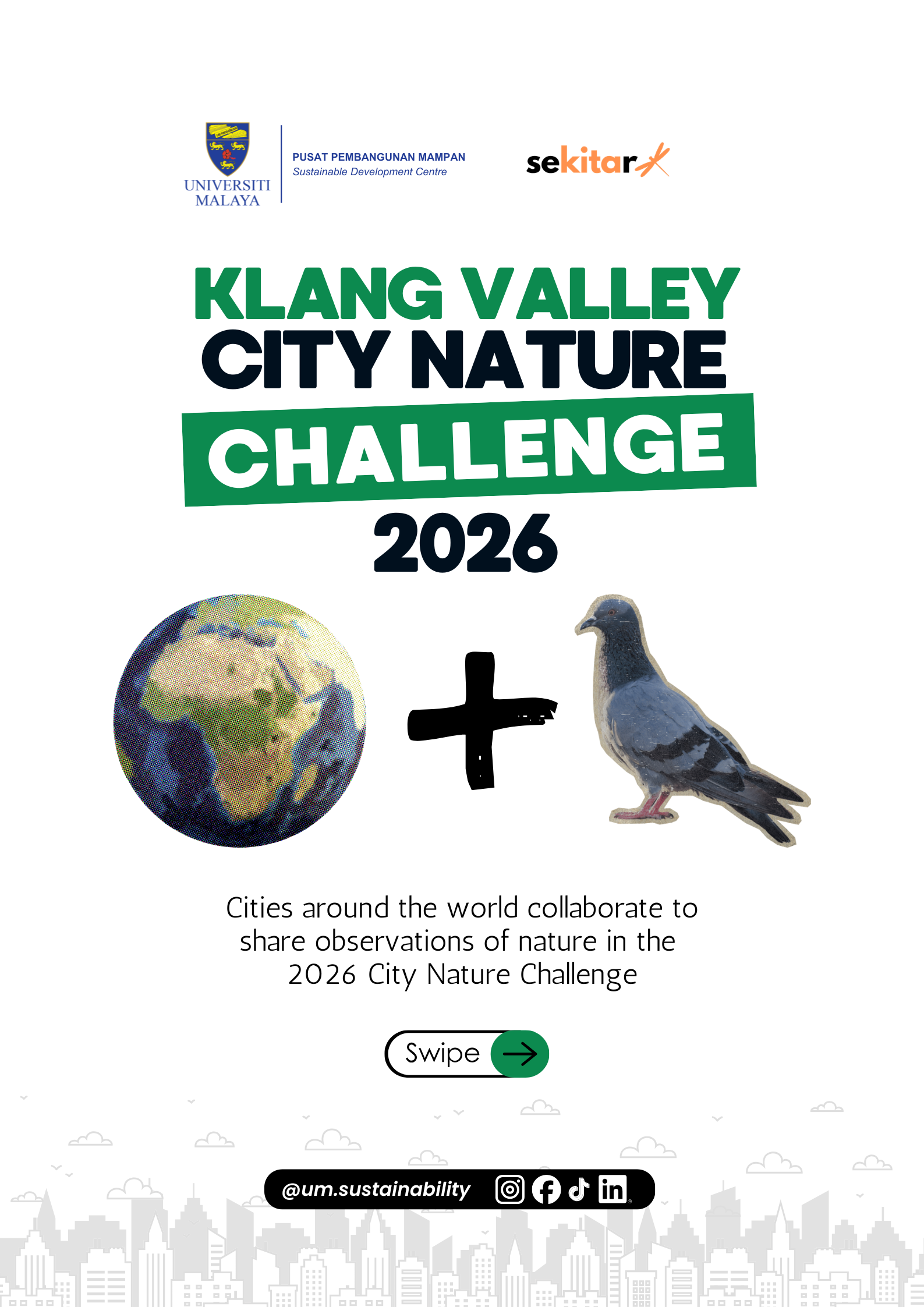
Participants are encouraged to document wild organisms. This includes plants, animals, fungi, lichens, and evidence such as feathers, shells, or animal tracks. “Wild” means the organism is not planted, kept, or maintained by people.
In the Klang Valley context, this could include:
Observations of pets, zoo animals, or cultivated plants such as garden or potted plants will not count toward the challenge. These should still be marked as “captive or cultivated” when uploaded.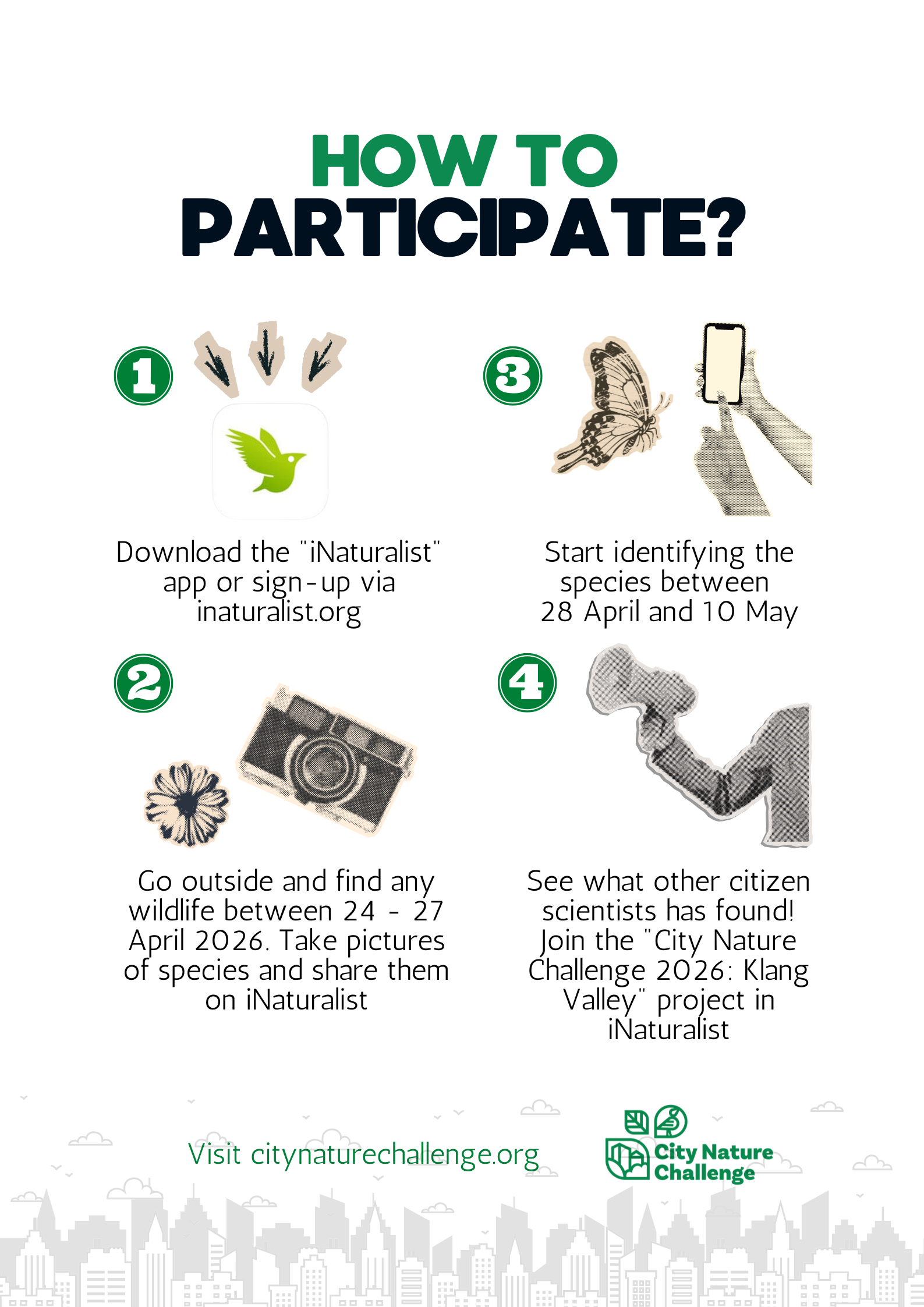
You do not need to be an expert to participate. Take clear photos and upload them using iNaturalist. The platform uses artificial intelligence to suggest possible identifications, and a global community will help verify them.
To improve data quality:
All observations contribute to a global open-access database used by scientists, conservationists, and policymakers. In Malaysia, this data supports better understanding of urban ecosystems, strengthens biodiversity conservation efforts, and informs sustainable city planning.
By participating, Klang Valley residents contribute to a global effort while helping build a clearer picture of Malaysia’s urban biodiversity, one observation at a time.